ATV or Side-by-Side: Which Should You Buy in Kingston?

ATV or Side-by-Side: Which Should You Buy in Kingston?
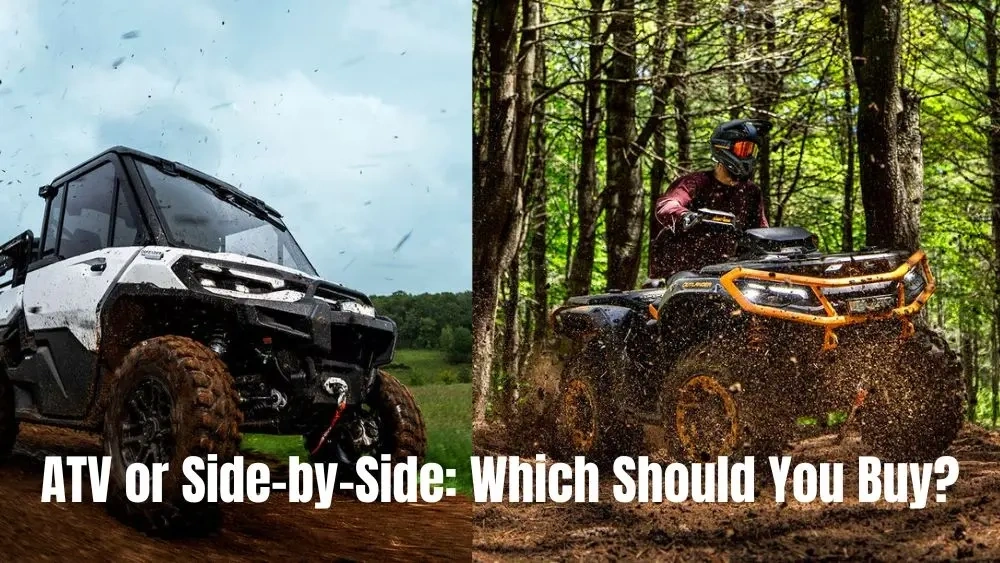
Choosing between an ATV and a side-by-side is one of the first decisions many off-road buyers face. Both can handle trails, rough terrain, property maintenance, hunting trips and outdoor adventures, but they provide noticeably different experiences.
An ATV is compact, agile and operated with handlebars while the rider sits on a straddle-style seat. A side-by-side, also called an SxS or UTV, is larger and uses a steering wheel, pedals, seatbelts and seats positioned beside one another. Some side-by-sides can carry several passengers and include a rear cargo bed for tools, supplies or recreational gear.
For buyers in Kingston, Napanee, Gananoque, Brockville, Belleville, Frontenac County and the surrounding Eastern Ontario region, the right choice depends on where you plan to ride, who will ride with you and how much work you expect the vehicle to perform.
This ATV versus side-by-side comparison will help you decide which type of off-road vehicle best fits your property, riding style and budget.
ATV vs. Side-by-Side: The Quick Answer
Choose an ATV when you want:
-
A compact and highly manoeuvrable off-road vehicle
-
Access to narrower trails
-
A lower-cost entry into off-road riding
-
A machine that is easier to store and transport
-
An active, sporty riding experience
-
Transportation primarily for one rider
-
Light hauling, hunting or property work
Choose a side-by-side when you want:
-
Space for passengers
-
A steering wheel, pedals and car-like seating
-
A cargo bed and greater hauling capability
-
More comfort during long rides
-
Seatbelts and a protective rollover structure
-
A machine for work, recreation or both
-
More options for roofs, windshields, cabs and other accessories
Can-Am describes ATVs as compact vehicles that prioritize manoeuvrability and affordability, while side-by-sides offer increased passenger capacity, stability, cargo capability and customization.
ATV and Side-by-Side Comparison
| Feature | ATV | Side-by-Side |
|---|---|---|
| Seating | Usually one rider; some models are designed for a passenger | Two to six occupants, depending on model |
| Controls | Handlebars and hand-operated controls | Steering wheel, pedals and gear selector |
| Riding position | Rider straddles the seat | Occupants sit in individual or bench-style seats |
| Trail access | Better for narrow trails and tight spaces | Requires a wider authorized trail |
| Cargo capacity | Front and rear racks; accessory storage | Larger cargo bed and interior storage |
| Passenger comfort | Limited | Generally better for long rides |
| Transport | Smaller trailer or suitable pickup setup may work | Usually requires a larger trailer and capable tow vehicle |
| Storage | Requires less space | Requires more garage, shed or outdoor storage space |
| Purchase price | Generally lower | Generally higher |
| Best suited to | Solo riding, agility, hunting and smaller properties | Families, work, hauling and longer recreational rides |
These are broad differences. Actual capacity, dimensions, weight and features vary considerably by model and package.
What Is an ATV?
An ATV, or all-terrain vehicle, is sometimes called a quad or four-wheeler. The rider sits on top of the vehicle and steers using handlebars. Riding an ATV involves active body positioning, especially while turning, climbing, descending or crossing uneven terrain.
Most adult ATVs are intended for one rider. A passenger should only be carried when the machine is specifically designed and equipped for one. A two-up ATV will normally have a designated passenger seat, footrests and handholds.
The smaller size of an ATV makes it useful for:
-
Navigating narrow forest trails
-
Travelling between hunting locations
-
Checking a rural or cottage property
-
Carrying smaller loads
-
Plowing a driveway
-
Reaching remote fishing or camping areas
-
Recreational trail riding
Can-Am’s current ATV categories include the utility and recreational Outlander lineup, the sport-oriented Renegade and youth models such as the DS and Renegade EFI.
What Is a Side-by-Side?
A side-by-side is a larger off-road vehicle in which the driver and passenger sit next to one another. These machines are also frequently referred to as UTVs, SxS vehicles or side-by-side vehicles.
Instead of handlebars, a side-by-side uses a steering wheel and foot pedals. Occupants sit inside the vehicle and use seatbelts. A rollover protective structure surrounds the passenger area, and many models can be equipped with a roof, windshield, rear panel, doors or a complete cab enclosure.
Side-by-sides are commonly divided into three categories:
-
Utility models for work, hauling and large properties
-
Recreational models for trails, exploration and family riding
-
Sport models for power, suspension performance and difficult terrain
Can-Am’s utility lineup includes the Defender, while recreational choices include the Commander, Maverick Trail and Maverick Sport. Performance-focused riders can explore models such as the Maverick X3 and Maverick R.
Choose an ATV for Narrow Trails and Greater Agility
One of the biggest advantages of an ATV is its compact size.
An ATV can travel through narrow spaces that may not accommodate a wider side-by-side. This can be particularly useful on private wooded properties, established ATV routes and trails with vehicle-width restrictions.
The rider can also shift body weight and respond directly to the terrain, creating a more active riding experience. For some people, this connection to the trail is one of the main reasons to choose an ATV.
An ATV may be the better choice when you:
-
Prefer technical trail riding
-
Frequently encounter tight turns
-
Ride through densely wooded areas
-
Usually ride alone
-
Want a machine that feels nimble and responsive
-
Have limited room for storage or transportation
Before riding, always confirm that the route permits motorized vehicles and that your specific vehicle meets any trail-width requirements.
Choose a Side-by-Side for Passengers
A side-by-side is usually the stronger choice when you want to bring family or friends.
Two-seat models work well for couples, hunting partners or property owners who regularly travel with another person. MAX and multi-row configurations can provide seating for additional passengers, depending on the model.
This shared seating arrangement lets occupants enjoy the same ride together rather than operating separate machines. It can also make conversation and navigation easier during a long day on the trail.
A side-by-side may be right for your family when:
-
Your spouse or partner regularly rides with you
-
You want to bring children or other family members
-
You prefer not to purchase several individual machines
-
Your passengers want a more enclosed seating position
-
You are planning longer recreational outings
Passenger capacity varies by model. Never carry more occupants than the vehicle is designed to accommodate, and make sure every occupant uses the installed safety equipment.
Choose a Side-by-Side for Work and Heavy Hauling
Both ATVs and side-by-sides can perform useful jobs, but a side-by-side generally provides greater cargo space and passenger capacity.
A utility side-by-side can be used to transport:
-
Firewood
-
Landscaping materials
-
Fencing supplies
-
Tools and equipment
-
Hunting gear
-
Animal feed
-
Camping supplies
-
Property maintenance equipment
A rear cargo bed makes loading bulky items easier than securing everything to an ATV rack. The side-by-side can also transport a worker and passenger while carrying equipment in the back.
Can-Am positions the Defender and Defender HD11 as utility-recreational side-by-sides designed for land management, hauling supplies, hunting support and demanding outdoor work.
For a farm, large rural property, cottage property or commercial worksite near Kingston, a side-by-side may provide the most practical combination of transportation and carrying capacity.
Choose an ATV for Light Work and Quick Jobs
A side-by-side is not automatically necessary for every property owner.
An ATV may be sufficient for checking fences, travelling between buildings, plowing a smaller driveway, towing an appropriate utility trailer or carrying tools on front and rear racks.
Because an ATV is compact, it can also be quicker to move around a congested property with narrow gates, wooded sections or limited parking.
A Can-Am Outlander can provide a strong balance between trail recreation and property work. Current Outlander models are designed for uses that include trails, hauling and utility tasks, with different engine and package choices available.
Consider Comfort on Longer Rides
An ATV requires the rider to remain physically engaged. You use your arms, legs and body position to control the machine over changing terrain.
Many riders enjoy that experience, but it can become tiring during a full day of riding.
A side-by-side provides a seat with a backrest, a steering wheel and a more supported driving position. Its suspension, wider stance and passenger compartment can make longer rides more comfortable for many drivers and passengers.
Side-by-sides can also be equipped with accessories such as:
-
Roofs
-
Windshields
-
Rear wind protection
-
Doors
-
Cab enclosures
-
Heaters
-
Audio systems
-
Additional storage
-
Navigation equipment
A recreational side-by-side may therefore be more suitable for long-distance rides around Frontenac County, Addington Highlands or the connected trail systems throughout Eastern Ontario.
Consider Weather Protection and Four-Season Use
Neither an open ATV nor an open side-by-side completely protects riders from rain, mud, dust or cold temperatures.
However, a side-by-side provides more options for weather protection. A roof and windshield can make a noticeable difference during rain or strong wind, while selected utility models can be equipped with more complete cab systems.
This can make a side-by-side appealing for:
-
Fall hunting
-
Winter property maintenance
-
Snow plowing
-
Cold-weather work
-
Rainy trail rides
-
Dusty summer conditions
An ATV remains highly capable in changing weather, but riders must rely more heavily on suitable helmets, outerwear, gloves, boots and other protective equipment.
Which Is More Affordable?
An ATV will generally have a lower starting purchase price than a comparable adult side-by-side.
Other potential costs include:
-
Freight and preparation
-
Taxes and licensing
-
Insurance
-
A trailer
-
A suitable tow vehicle
-
Riding equipment
-
Trail permits
-
Scheduled maintenance
-
Replacement tires
-
Storage
-
Accessories and upgrades
A side-by-side may cost more to purchase, transport and accessorize. Larger tires, additional suspension components and a bigger overall vehicle can also affect long-term operating expenses.
However, value should be measured by how well the machine meets your needs. Purchasing an ATV to save money may not be worthwhile if you eventually need more passenger room and cargo capacity. Similarly, buying a large side-by-side may be unnecessary if you only want an agile machine for solo trail riding.
Cartronics Powersports offers financing options on eligible powersports vehicles for buyers who prefer to spread the purchase cost over scheduled payments.
Think About Transportation and Storage
Before choosing your machine, determine how you will bring it home and transport it to the trail.
An ATV is usually easier to transport because it is narrower, shorter and lighter than a side-by-side. A suitable ATV trailer may also be easier to store when it is not being used.
A side-by-side typically requires:
-
A larger trailer
-
More trailer capacity
-
A suitable tow vehicle
-
Additional garage or storage space
-
Wider ramps and loading equipment
Measure your garage door, shed entrance, trailer and intended storage area before purchasing. Remember that adding a roof, mirrors, larger tires or other accessories can alter the vehicle’s overall dimensions.
Check Local Trail Access
The size difference between an ATV and a side-by-side can affect where you are allowed to ride.
Some routes permit both vehicle types, while others restrict vehicles according to width, weight, season or vehicle classification. A trail described as an “ATV trail” should not automatically be assumed to accept every side-by-side.
Before travelling from Kingston to a trail system, verify:
-
Whether ATVs are allowed
-
Whether side-by-sides are allowed
-
The maximum permitted width
-
Which trail permit is required
-
Where unloading and parking are permitted
-
Whether public-road connections are legal
-
Whether any sections are temporarily closed
Internal link opportunity: Read our guide to The Best Places to Ride an ATV Near Kingston, Ontario for more information about local riding areas and trail-planning considerations.
Understand Ontario Off-Road Vehicle Rules
Ontario requirements may differ depending on the vehicle, rider, location and whether you are travelling on private property, a designated trail or an authorized public road.
Registration, insurance, helmets, licensing and vehicle equipment requirements may apply. Public-road access also depends on provincial regulations and the bylaws of the municipality responsible for the road.
Rules can change as you travel between Kingston, South Frontenac, Central Frontenac, Lennox and Addington County and other Eastern Ontario municipalities.
Check current provincial regulations, municipal bylaws and trail rules before riding. Purchasing an off-road vehicle does not automatically give the owner permission to operate it on any trail or public road.
Which Can-Am ATV Is Right for You?
Cartronics Powersports carries Can-Am ATV models for recreation, utility work and performance riding.
Can-Am Outlander
The Outlander is a versatile option for buyers who want to combine trail riding with hauling, hunting or property maintenance. Different engine sizes and packages allow buyers to prioritize value, power, two-up seating or specialized terrain capability.
Can-Am Renegade
The Renegade is a sport-oriented ATV intended for riders who place greater emphasis on power, aggressive handling and challenging terrain.
Can-Am DS and Renegade EFI
Can-Am’s youth lineup includes models designed for younger riders. Youth vehicles must be selected according to the manufacturer’s age recommendations and used with proper supervision and safety equipment.
Cartronics’ current ATV catalogue includes Outlander, Renegade and DS model families, although individual units, colours and packages are subject to availability.
Which Can-Am Side-by-Side Is Right for You?
Can-Am Defender
Choose a Defender when work capability, cargo space and property use are your main priorities. It is well suited to farming, hunting, land maintenance and transporting equipment.
Can-Am Commander
The Commander is designed as a crossover between utility and recreation. It can handle property chores while still providing a comfortable trail-riding experience.
Can-Am Maverick Trail
The Maverick Trail is a recreational side-by-side designed for exploration, trail riding and comfort. Its configuration may suit riders who want an SxS experience while keeping overall width in mind.
Can-Am Maverick Sport
The Maverick Sport provides a more performance-oriented recreational experience while remaining suitable for trail exploration.
Can-Am Maverick X3 or Maverick R
These models are intended for buyers who prioritize performance, advanced suspension and demanding terrain. They may be excessive for casual property work but attractive to experienced sport riders.
Cartronics’ Can-Am side-by-side catalogue includes Defender, Commander and several Maverick families for utility, recreational and sport use.
ATV or Side-by-Side for Hunting?
An ATV is often the better hunting vehicle when:
-
Trails are narrow
-
You hunt alone
-
You need a machine that is easy to conceal or park
-
You want to transport the vehicle with a smaller trailer
-
Your gear can fit on racks or in accessory storage
A side-by-side may be better when:
-
You hunt with a partner or group
-
You carry substantial equipment
-
You need a cargo bed
-
You travel longer distances
-
You want increased protection from wind and weather
-
You need to transport materials around a hunting property
The right answer depends heavily on the trail network and the amount of equipment you carry.
ATV or Side-by-Side for a Cottage?
An ATV may be sufficient for a smaller cottage property, especially when the owner mainly needs transportation, light plowing or access to narrow trails.
A side-by-side is worth considering when the property is larger, several family members will use the vehicle or you frequently carry firewood, tools, garbage, landscaping supplies and recreational equipment.
Also consider noise, available storage, property boundaries and local regulations before operating either vehicle near neighbouring cottages.
ATV or Side-by-Side for a First-Time Buyer?
An ATV may look like the simpler and more affordable entry point, but it requires active rider input and appropriate body positioning. New riders should select a manageable machine rather than automatically choosing the most powerful engine available.
A side-by-side uses familiar car-like controls, but its size, weight and capability still demand proper training and responsible operation.
First-time buyers should consider:
-
Previous riding experience
-
Physical comfort
-
Passenger needs
-
Typical terrain
-
Vehicle dimensions
-
Engine performance
-
Transportation requirements
-
Training and safety equipment
The Cartronics sales team can compare models based on how and where you plan to ride rather than recommending a machine based only on engine size.
Final Verdict: ATV or Side-by-Side?
An ATV is likely the better choice when you usually ride alone, prefer narrow trails, have limited storage space or want a more affordable and active off-road experience.
A side-by-side is likely the better choice when you regularly carry passengers, need a cargo bed, work on a large property or prioritize comfort and weather-protection options.
For buyers who want some of both, consider either a utility-recreational ATV such as the Can-Am Outlander or a crossover side-by-side such as the Can-Am Commander.
The best decision is not based on which vehicle is bigger, faster or more expensive. It is based on which machine fits the way you will actually use it.
Shop Can-Am ATVs and Side-by-Sides in Kingston
Cartronics Powersports offers new Can-Am ATVs and side-by-sides, pre-owned powersports vehicles, financing, OEM parts, accessories and professional maintenance in Kingston, Ontario.
The dealership serves off-road riders from Kingston and surrounding communities, including Napanee, Gananoque, Brockville, Belleville, Frontenac County and Lennox and Addington County.
Visit Cartronics Powersports at 538 O’Connor Drive in Kingston to compare models in person. Tell the sales team:
-
Where you intend to ride
-
How many passengers you need to carry
-
What type of work the vehicle will perform
-
How you plan to tow and store it
-
Which comfort and accessory features matter most
-
Your preferred budget
The Cartronics team can help you decide whether a Can-Am ATV or side-by-side is the right fit for your Eastern Ontario adventures.
Frequently Asked Questions
Is an ATV or side-by-side better for trail riding?
An ATV is generally better for narrow, technical trails and riders who prefer agility. A side-by-side may be more comfortable for long rides, passengers and trails wide enough to accommodate the vehicle.
Is a side-by-side safer than an ATV?
The vehicles use different safety systems and require different operating techniques. Side-by-sides include seatbelts and a rollover protective structure, while ATV riders use active body positioning and sit on top of the machine. Both must be operated according to manufacturer instructions with the required protective equipment.
Can two people ride on an ATV?
Only carry a passenger when the ATV is specifically designed for two people. Do not add a passenger to a single-rider ATV simply because there appears to be room on the seat.
Is an ATV cheaper than a side-by-side?
ATVs generally have a lower starting purchase price. Total ownership costs will depend on the model, insurance, accessories, trailer, maintenance and how the vehicle is used.
Is a side-by-side good for snow plowing?
Many utility side-by-sides can be equipped with plows and winter accessories. Their cargo capacity and available cab protection can make them useful for property maintenance, but the vehicle and plow must be properly matched.
Which is better for hunting: an ATV or a side-by-side?
An ATV is a strong choice for solo hunters and narrow trails. A side-by-side is often better for hunting partners, larger equipment loads and longer trips in changing weather.
Where can I buy a Can-Am ATV or side-by-side near Kingston?
Cartronics Powersports sells Can-Am ATVs and side-by-sides at 538 O’Connor Drive in Kingston and serves buyers throughout Eastern Ontario. Available inventory and promotions change, so check the dealership’s current listings or contact the sales team for details.