
How to Winterize a Sea-Doo in Ontario | Complete Checklist

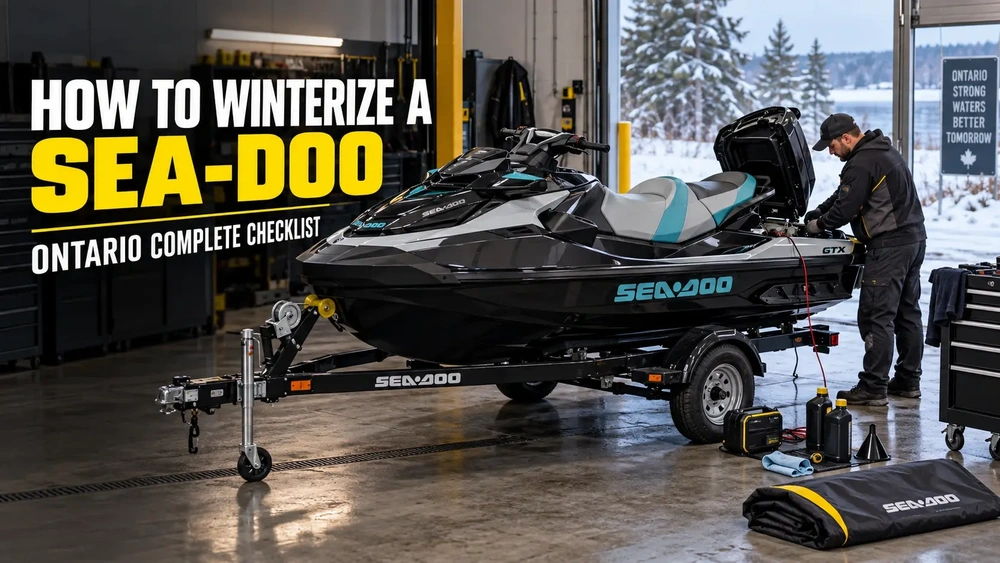
A proper Sea-Doo winterization is essential when you live in Ontario. Freezing temperatures, moisture, deteriorating fuel and months of inactivity can all cause problems if your personal watercraft is put away without the correct preparation.
Winterization protects the engine, exhaust system, fuel system, battery, jet pump and other components while your Sea-Doo is not being used. It can also make your first ride next spring much easier and reduce the chance of discovering an expensive problem after the ice melts.
This guide explains how to winterize a Sea-Doo in Ontario, when the work should be completed and what to consider when choosing between home storage and professional winter storage.
Cartronics Powersports provides professional Sea-Doo winterization and winter storage in Kingston, Ontario. Contact our service department for current pricing, availability and details about what is included.
When Should You Winterize a Sea-Doo in Ontario?
Your Sea-Doo should be winterized after your final ride of the season and before freezing temperatures arrive.
Many Ontario riders schedule their winterization between September and November. The best timing depends on the weather and how late you plan to ride, but waiting until the first hard freeze can be risky. Water may remain inside parts of the exhaust system even after the Sea-Doo has been removed from the lake.
It is also a good idea to book professional winterization and storage early. Service schedules and available storage space can fill quickly as boating season comes to an end.
Why Does a Sea-Doo Need to Be Winterized?
A Sea-Doo may sit unused for five or six months during an Ontario winter. Without proper preparation, several problems can develop:
- Water remaining in the exhaust system can freeze.
- Untreated fuel can deteriorate and leave deposits.
- Internal engine components can become vulnerable to corrosion.
- An unmaintained battery can lose its charge or freeze.
- Moisture can lead to mildew, corrosion and electrical problems.
- Debris in the jet pump may cause damage or affect performance.
- Small problems may go unnoticed until the following spring.
Winterization is not simply about keeping the engine from freezing. It prepares the entire watercraft for an extended period without use.
Sea-Doo Winterization Checklist
Procedures can vary between Sea-Doo models, engines and model years. Always check the storage section of your operator’s guide before completing any maintenance yourself.
1. Wash and Dry the Sea-Doo
Begin by thoroughly washing the hull, deck, footwells and other exposed surfaces with a marine-safe cleaner.
Remove:
- Lake weeds and vegetation
- Mud and sand
- Insects
- Oil or fuel residue
- Organic buildup
- Road grime from towing
Pay particular attention to the footwells and other areas where water can collect. Once the Sea-Doo is clean, allow it to dry completely.
This is also a good opportunity to inspect the hull for cracks, scratches or other damage that should be repaired before next season.
2. Inspect the Jet Pump and Intake
Check the intake grate, impeller and visible areas of the jet pump for weeds, fishing line, stones or other debris.
Damage or debris around the jet pump can cause:
- Reduced acceleration
- Unusual vibration
- Cavitation
- Poor performance
- Damage to the impeller or wear ring
If you notice cracks, excessive wear or signs of impact damage, have the watercraft inspected by a qualified Sea-Doo technician.
3. Flush and Drain the Exhaust System
Sea-Doo personal watercraft use a closed-loop engine cooling system containing coolant. However, water still passes through the exhaust system and must be properly removed before winter storage.
The exhaust system should be flushed and drained according to the procedure specified for your model. Using the wrong sequence when connecting water, starting the engine or shutting the system down can allow water to enter areas where it does not belong.
Certain engines and performance models may also have additional storage requirements. If you are uncertain about the correct procedure, professional winterization is the safer choice.
4. Stabilize the Fuel
Fuel can degrade while a Sea-Doo is sitting in storage. As it deteriorates, it can create deposits that affect the fuel system and make the engine difficult to start.
A suitable marine fuel stabilizer should be added according to its directions and the recommendations in your Sea-Doo operator’s guide. The stabilized fuel must then be circulated through the fuel system.
Sea-Doo generally recommends filling the tank with fresh fuel to help reduce condensation. If the watercraft will be stored at a professional facility, confirm whether that facility has any specific fuel-level requirements.
5. Change the Engine Oil and Filter
Winterization is a convenient time to change the engine oil and filter. Used oil can contain moisture, fuel residue and contaminants that you may not want sitting inside the engine throughout the winter.
Sea-Doo personal watercraft do not have a traditional engine oil drain plug. The used oil normally needs to be removed using an appropriate extraction pump.
The correct oil, filter and procedure depend on the engine. Always follow the operator’s guide and use products that meet BRP’s specifications.
If you do not have the necessary equipment or are uncomfortable performing an oil change, the Cartronics service department can handle the maintenance as part of preparing your Sea-Doo for storage.
6. Protect the Engine Internally
Storage or fogging oil helps protect internal engine components against corrosion during extended storage.
This part of the process can require removing ignition coils and spark plugs, applying storage oil and carefully cranking the engine to distribute it. The exact procedure should be confirmed in the operator’s guide for your model and year.
Incorrectly removing coils, handling spark plugs or cranking the engine can cause damage. This is one of the winterization steps many owners prefer to leave to an experienced technician.
7. Lubricate Moving and Exposed Components
Exposed metal parts, hinges, cables, seals and linkages should be inspected and lubricated where recommended.
Common areas may include:
- Steering components
- Throttle components
- Brake and reverse linkages
- Hinges and latches
- Exposed metal surfaces
- Recommended seals and pivot points
Use lubricants intended for marine applications and remove excessive residue after application.
8. Remove and Maintain the Battery
A battery can slowly discharge while sitting unused. A deeply discharged battery may freeze during cold weather and could require replacement in the spring.
Depending on your storage setup and operator’s guide, battery preparation may include:
- Disconnecting the negative terminal first
- Removing the battery
- Cleaning and inspecting the terminals
- Storing it in a cool, dry and ventilated location
- Connecting it to a compatible battery maintainer
- Checking its condition during the winter
Use a charger or maintainer that is suitable for the battery type installed in your Sea-Doo.
9. Inspect the Trailer
The Sea-Doo trailer should not be forgotten during winter preparation.
Inspect:
- Tire condition and pressure
- Wheel bearings
- Hubs
- Lights and wiring
- Winch strap
- Safety chains
- Coupler
- Tie-down straps
- Signs of corrosion
If the trailer will remain stationary for several months, make sure it is parked securely on a firm surface. Do not leave the parking brake engaged for long-term storage if the trailer is equipped with one unless the manufacturer instructs otherwise.
10. Prepare the Sea-Doo for Storage
The watercraft should be clean and completely dry before it is covered. Remove food, wet towels, life jackets and anything else that could attract pests or trap moisture.
Use a fitted, breathable Sea-Doo cover. Avoid sealing the watercraft in non-breathable plastic, which can trap condensation and encourage mould or corrosion.
Whenever possible, store the Sea-Doo in a dry, ventilated and protected location.
Can You Store a Sea-Doo Outside During an Ontario Winter?
A properly winterized Sea-Doo can be stored outside, but outdoor storage exposes it to more moisture, snow, ice, wind, ultraviolet light and temperature changes.
If outdoor storage is your only option:
- Complete every required winterization procedure.
- Use a fitted and breathable cover.
- Secure the cover so it cannot flap in strong wind.
- Do not allow snow or water to accumulate on top.
- Keep the watercraft properly supported on its trailer.
- Check the Sea-Doo and cover periodically.
- Protect the trailer from prolonged exposure to moisture and road salt.
Professional storage eliminates many of the concerns associated with keeping a Sea-Doo at home. It can also free up space in your garage, driveway or yard during the winter.
Cartronics Powersports offers Sea-Doo winter storage in Kingston. Space may be limited, so owners should contact the dealership early for current availability.
Do You Need to Winterize a Sea-Doo Stored Indoors?
Yes. Indoor storage protects the exterior from snow and ice, but it does not stabilize the fuel, maintain the battery, protect internal components or remove water from the exhaust system.
Even a Sea-Doo stored in a garage should receive the proper mechanical preparation before being parked for the winter.
A heated building is not a substitute for winterization. Fuel can still deteriorate, batteries can still discharge and corrosion can still develop during long-term storage.
DIY vs. Professional Sea-Doo Winterization
Owners with the proper tools, mechanical experience and operator’s guide may be comfortable performing their own winterization.
DIY winterization may be suitable if you:
- Understand the requirements for your specific model
- Have an appropriate oil extraction system
- Know the correct flushing and shutdown sequence
- Can safely remove and reinstall ignition components
- Have a suitable battery charger
- Have an appropriate place to store the watercraft
Professional winterization may be preferable if you:
- Are winterizing a Sea-Doo for the first time
- Own a supercharged or high-performance model
- Do not have the required tools
- Are unsure about the exhaust draining procedure
- Want the watercraft inspected before storage
- Do not have enough storage space at home
- Want winterization and storage handled together
Having the work performed professionally provides confidence that important steps have not been missed. It also gives technicians an opportunity to identify wear, damage or maintenance needs before the next riding season.
Professional Sea-Doo Winterization and Storage in Kingston
Cartronics Powersports can help prepare your Sea-Doo for its Ontario winter layup and provide storage until boating season returns.
Choosing professional winterization and storage means you do not need to purchase specialized equipment, find space at home or worry about whether water, fuel, oil and battery systems were prepared correctly.
When spring arrives, you will be in a much better position to get back on the water without dealing with preventable storage-related problems.
Contact Cartronics Powersports for current winterization packages, storage availability and booking information.
Frequently Asked Questions About Sea-Doo Winterization
Does every Sea-Doo need to be winterized in Ontario?
Yes. Any Sea-Doo that will remain unused through an Ontario winter should be properly prepared for long-term storage.
Do Sea-Doo watercraft need antifreeze?
Sea-Doo personal watercraft use a closed-loop engine cooling system containing coolant. The exhaust system still uses external water and must be flushed and drained correctly. Always follow the storage procedure for your exact model.
What happens if you do not winterize a Sea-Doo?
Possible consequences include freeze damage, corrosion, deteriorated fuel, battery failure and difficulty starting the watercraft in the spring. The severity will depend on how the machine was used, stored and exposed to freezing temperatures.
Can I winterize my Sea-Doo myself?
Yes, provided you have the correct tools, mechanical knowledge and storage instructions for your model. If you are unsure about any part of the procedure, have the work completed by a qualified technician.
How early should I book Sea-Doo winter storage?
Book as soon as you know when your final ride will be. Winterization appointments and storage space can fill quickly during the fall.
Is a cover enough for winter storage?
No. A cover protects the exterior, but it does not prepare the engine, exhaust, fuel system or battery for several months of inactivity.
Is a Sea-Doo Switch winterized the same way?
No. A Sea-Doo Switch pontoon has different systems and storage procedures from a personal watercraft. Consult the Switch operator’s guide or arrange professional winterization for the correct model.
Book Sea-Doo Winterization and Storage at Cartronics Powersports
Protect your Sea-Doo through the Ontario winter and make next spring’s launch easier.
Cartronics Powersports provides professional Sea-Doo winterization and winter storage in Kingston, serving watercraft owners from Kingston, Napanee, Gananoque, Brockville, Belleville and surrounding Eastern Ontario communities.
Contact our service department at 613-634-8044, or visit Cartronics Powersports at 538 O’Connor Drive in Kingston to ask about winterization, current storage availability and booking options.