
SNOWMOBILE HELMETS EXPLAINED: MODULAR, FULL-FACE, AND HEATED VISORS

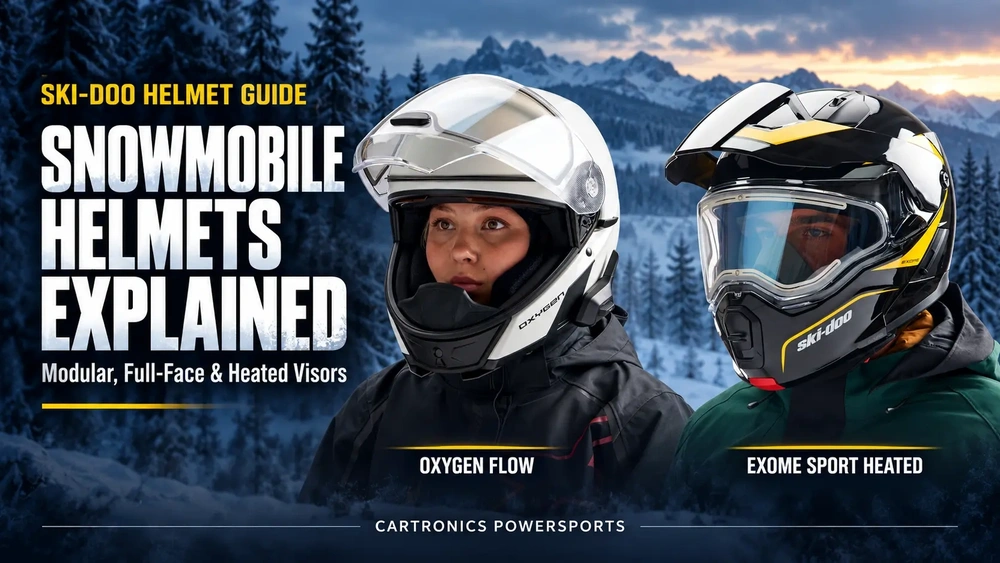
Choosing a snowmobile helmet involves more than picking a colour that matches your sled. The way a helmet fits, manages moisture and handles changing temperatures can make a big difference during a winter ride.
Should you choose a modular snowmobile helmet or a full-face design? Is a heated visor worth it? And which Ski-Doo helmets should you consider if you wear glasses?
At Cartronics Powersports in Kingston, Ontario, we carry Ski-Doo helmets and can help you compare the options. This guide focuses on current Ski-Doo models, including the Oxygen Flow, Advex Sport and Exome families.
The first thing to understand is that modular and full-face describe helmet designs, while a heated visor is a feature. You can choose a modular helmet with an electric visor or a full-face helmet with one.
Modular vs. Full-Face Snowmobile Helmets: What Is the Difference?
A traditional full-face helmet has a fixed chin bar. Its visor opens, but the lower front of the helmet stays in place.
A modular helmet has an opening front section that gives you greater access to your face. That can be convenient when you stop to speak with other riders, have a drink or take a break.
Within Ski-Doo’s current lineup, the Oxygen Flow is a full-face option, while the Advex and Exome families offer modular designs.
Neither description tells you everything about a helmet. Fit, ventilation, visor equipment and the exact version you choose all deserve attention.
Why Choose a Modular Snowmobile Helmet?
A modular helmet is worth considering if you value convenience during stops. Being able to open the front can make it easier to communicate without removing the entire helmet.
Ski-Doo’s Advex and Exome designs offer different combinations of materials, ventilation and visor features. Compare them in person to see which opening mechanism and fit you prefer.
Use the opening feature as directed in the helmet’s operator guide, and close and secure the helmet correctly before riding.
Why Choose a Full-Face Snowmobile Helmet?
A full-face design is a good option to explore if opening the chin section is not a priority.
For riders considering a new Ski-Doo full-face helmet, the Oxygen Flow combines an electric visor with adjustable ventilation. It is a useful starting point for a discussion about trail comfort, visibility and how you manage temperature throughout the day.
Ski-Doo Oxygen Flow: Full-Face with an Electric Visor
The Ski-Doo Oxygen Flow Heated Helmet with Electric Visor features an M-FORGE composite shell, a retractable sun visor and a panoramic field of vision.
Its ventilation controls are designed for use with gloves, allowing you to adjust airflow without taking them off. Ski-Doo also lists a noise-reduction system and compatibility with prescription glasses.
Consider trying the Oxygen Flow if your shopping priorities include:
-
A full-face design.
-
An electric heated visor.
-
Adjustable ventilation.
-
Compatibility with prescription glasses.
The Oxygen Flow Carbon is another option in the family. It uses a carbon M-FORGE composite shell and retains features such as adjustable ventilation and an electric visor.
If you are comparing the two, try both on. Ask about the weight difference in your size, how each feels and whether the Carbon version’s benefits match your budget.
Ski-Doo Advex Sport: Modular Convenience and Adjustable Airflow
The Ski-Doo Advex Sport combines modular face access with adjustable ventilation, an M-FORGE composite shell and a removable peak.
Ski-Doo offers both a regular Advex Sport and an Advex Sport Heated Helmet with Electric Visor, also described as the Sport Radiant in its product information.
The heated version includes an electric shield, a retractable sun visor and a breathguard system for moisture management. It also supports the optional BRP Vibe communication system.
This makes the Advex Sport worth comparing if you want modular access and are interested in adding communications equipment.
However, communication-ready does not mean a communication system is included. Confirm whether you are looking at a helmet-only version or a package that includes Vibe.
Similarly, do not assume every Advex Sport has an electric visor. Check the complete product name and equipment list.
Ski-Doo Exome: Another Modular Option to Compare
The Exome family gives shoppers another Ski-Doo modular design to consider.
The standard Ski-Doo Exome Helmet features a dual-lens anti-fog visor and a Breath Evac mask system. Ski-Doo describes its fit as eyeglass-ready.
The Exome Sport Heated Helmet with Electric Visor, also called the Exome Sport Radiant, adds a dual-lens electric heated visor. Its equipment includes a removable peak, a quick-release chin strap and the Breath Evac mask system.
The Exome Sport Heated is worth trying if you want both modular access and an electric visor. Compare its fit and controls with the Advex before deciding.
As with other helmet families, the exact version matters. “Exome,” “Exome Sport” and “Exome Sport Heated” should not be treated as interchangeable equipment descriptions.
Is a Heated Snowmobile Visor Worth It?
A heated visor uses electrical power to warm the shield and help manage fogging. Its main purpose is visibility.
For riders who regularly deal with visor fogging, an electric shield is a feature worth prioritizing when shopping. It is available on both modular and full-face Ski-Doo helmets, so you do not have to choose one helmet style just to get it.
Still, a heated visor is one part of a complete setup. Proper ventilation, helmet fit and correct use of any breath-management system also matter.
When comparing a heated and non-heated version, ask yourself:
-
Have I struggled with visor fogging in my current helmet?
-
Do I want an electric visor from the start?
-
What connections will I need on my snowmobile?
-
Which helmet fits comfortably with my usual riding gear?
A helmet that fits well and suits your riding is a better purchase than one chosen solely for its feature list.
Does a Heated Visor Need to Be Plugged In?
The visor needs the correct electrical supply for its heating function to operate. Confirm the helmet’s required cable, connector and compatible vehicle power connection before your first ride.
Tell our team which snowmobile you own and whether you are setting up a helmet for the driver or a passenger. That helps us identify the appropriate connection rather than assuming every sled is equipped the same way.
Why Does a Snowmobile Helmet Visor Fog Up?
Fog develops when moisture condenses on a cold surface. Inside a helmet, warm, moist breath can contribute to that problem.
Ski-Doo uses different combinations of ventilation, dual-lens shields, electric heating and breath-management systems across its helmets.
For example, the Exome uses a Breath Evac mask, while the Advex Sport includes a breathguard system. These components need to be fitted and used according to the instructions for that helmet.
If fogging occurs, review the helmet’s operating instructions and check its setup before assuming you need a different model. For an electric visor, that includes checking the power connection.
No helmet should be treated as guaranteed never to fog in every situation. If your view becomes obstructed, stop safely and resolve the problem before continuing.
What Is the Best Ski-Doo Snowmobile Helmet for Glasses?
Ski-Doo identifies the Oxygen Flow, Advex and Exome families as compatible with prescription glasses. The best choice for you still depends on how your particular frames fit inside the helmet.
Bring your glasses when you try on a new helmet.
Check whether the arms of your glasses create pressure around your temples or ears. Make sure your frames sit naturally and do not interfere with the visor or any fitted mask.
Also remember that an electric outer visor does not directly heat your prescription lenses. Glasses compatibility and visor heating are useful features, but they are not a promise that your glasses will never fog.
Trying the complete setup together is more useful than selecting a helmet based only on a glasses-friendly description.
How Should a Snowmobile Helmet Fit?
Start with a measurement, then confirm the fit in person.
Ski-Doo’s helmet sizing instructions recommend measuring around the largest part of your head, approximately 2.5 centimetres above your eyebrows. Repeat the measurement and use the larger result when consulting the size chart.
The size label is a starting point. Before purchasing, take time to assess the helmet with its strap fastened and follow its fit-check instructions.
Bring the balaclava and glasses you intend to wear. Ask for help if the helmet feels loose, moves excessively or produces uncomfortable pressure.
While trying it on, check practical details too:
-
Can you operate the visor and vents with your gloves?
-
Can you comfortably use the chin-strap fastener?
-
Does the sun visor clear your glasses?
-
Can you operate and secure the modular opening, if fitted?
-
Does the helmet work comfortably with your jacket collar?
Do not assume your new helmet should be the same size as an older helmet or a different model.
Which Ski-Doo Helmet Should You Choose?
Your shortlist should reflect the features you will actually use.
Start with the Oxygen Flow if you want a full-face helmet with an electric visor and adjustable ventilation.
Compare the Advex Sport Heated if modular access, adjustable airflow and optional Vibe integration appeal to you.
Try the Exome Sport Heated if you want another modular option with an electric visor and Breath Evac system.
Consider the regular Advex Sport or Exome if you are exploring a non-heated version, while confirming its exact visor equipment and suitability for your riding.
These are starting points for comparison. The final choice should come down to fit, comfort, equipment and budget.
Frequently Asked Questions About Ski-Doo Helmets
Are modular helmets and heated helmets the same thing?
No. Modular describes a helmet with an opening front section. Heated refers to an electric visor feature. A helmet can have both.
Does every new Ski-Doo helmet come with a heated visor?
No. Ski-Doo sells heated and non-heated helmet options. Check the specific model and version before buying.
Can I add a heated visor later?
That depends on the helmet and the compatible accessories available for it. Check the exact model and part requirements before purchasing a replacement shield. Do not assume visors are interchangeable between helmet families.
Is the Ski-Doo Oxygen Flow a modular helmet?
No. Ski-Doo classifies the Oxygen Flow as a full-face helmet. Shoppers wanting modular face access should compare models such as the Advex and Exome.
Should I buy a helmet based on the lowest price?
Price matters, but the helmet also needs to fit properly and include the equipment you want. Compare the total setup, including any required power connections or optional communication accessories.
Shop Ski-Doo Snowmobile Helmets in Kingston, Ontario
Whether you are buying your first snowmobile helmet or replacing your current one, trying on different models can make the decision much easier.
At Cartronics Powersports in Kingston, we can help you compare new Ski-Doo helmets, understand heated visor options and check which accessories suit your setup.
Bring your glasses, your usual riding balaclava and the details of your snowmobile. Contact us for current model, size and colour availability, or stop by to find a helmet that fits your next winter adventure.
Drop by 538 O'Connor Drive in Kingston, or give us a call at 613-634-8044 today!