
ATV Tracks vs. Tires for Winter | Can-Am Apache Guide

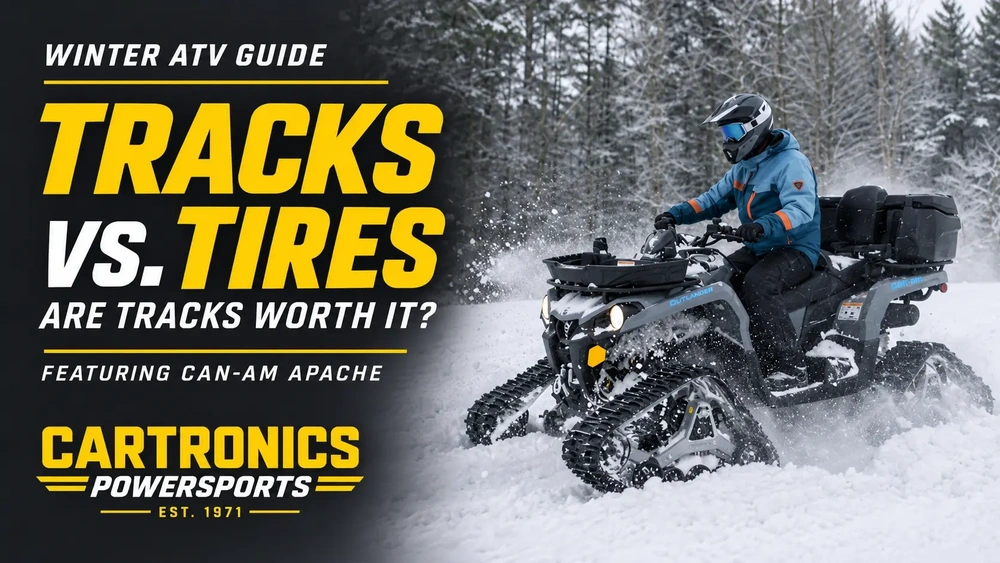
ATV Tracks vs. Tires for Winter: Are Tracks Worth It?
When winter arrives in Kingston and Eastern Ontario, your ATV can still have plenty of work to do. Clearing snow, checking a rural property and reaching a cabin are all reasons to keep it ready for the colder months. But when the snow gets deeper, are tires enough, or is it time to consider tracks?
ATV tracks are worth considering when deep, loose snow regularly limits where you can go. If most of your winter use involves a maintained driveway or occasional trips through shallow snow, tires may offer better value. The right choice depends on the job, the conditions and how often you will use the extra capability.
Here is how the options compare, including where Can-Am Apache track systems fit into the decision.
What Do ATV Tracks Do Differently?
A track system replaces the ATV’s wheels with individual track assemblies. Those assemblies spread the vehicle’s weight across a larger contact area, improving flotation in soft snow. The goal is to help the ATV travel over snow that would otherwise allow its tires to sink and dig in.
That can make a meaningful difference when you need to cross an unplowed property or reach a building after a snowfall. It does not make the ATV unstoppable: snow density, terrain, vehicle load and riding technique still affect how it performs.
There is no single snow-depth number at which every ATV needs tracks. A firm, supportive surface and loose powder can produce very different results.
ATV Tracks vs. Tires: A Quick Winter Comparison
| Consideration | ATV tires | ATV tracks |
|---|---|---|
| Deep, loose snow | Can sink and lose forward progress | Larger footprint improves flotation |
| Maintained surfaces | A practical starting point for shallow or cleared conditions | Extra capability may offer less value here |
| Driving experience | Keeps the ATV’s familiar wheel setup | Changes handling and braking; requires reduced-speed operation |
| Ownership cost | Keeping suitable existing tires avoids a track conversion | Budget for the system, required parts, installation and maintenance |
| Seasonal use | Choose tires appropriate for your terrain and vehicle | Some systems suit multiple seasons; others are winter-only |
Which Can-Am Apache Track System Should You Consider?
Apache is a family of track systems, so it is important to compare the actual product and its fitment. Two useful starting points are Apache XC and Apache Backcountry.
Apache XC: For Use Across the Seasons
Can-Am positions Apache XC as an all-season track system. It is worth discussing if your needs extend beyond winter and include suitable soft-ground work during other parts of the year.
The current Apache XC system includes a steel frame, replaceable hub and wheel bearings, and a track design intended to improve traction and flotation. Can-Am lists a DPS module and engine and CVT pre-filters as required equipment; the mounting kit is sold separately.
Year-round capability does not mean every surface or riding style is appropriate. Follow the operating instructions for the specific system and vehicle.
Apache Backcountry: For Dedicated Winter Use
Apache Backcountry is designed for winter use only. Its snow-focused design includes 2-inch track lugs, making it a relevant option for riders whose priority is travel through deep snow.
Can-Am specifies an Apache Backcountry mounting kit, Track DPS module, and engine and CVT pre-filters as required equipment. These details belong in the quote from the beginning.
If you plan to leave tracks installed after the snow disappears, Backcountry is not the appropriate choice. Also discuss wear considerations for its sliding components when operating on hard-packed snow.
What About Apache XC LT and Apache 360?
You may also encounter Apache XC LT and the Apache 360/360 LT family. LT identifies a long-track version, but the name alone does not establish compatibility. Have the exact part number checked against your ATV’s model, year, engine and platform before choosing a system.
How Much Do Can-Am Apache Tracks Cost?
For a sense of the investment, Can-Am’s Canadian online store listed the Apache XC system at $6,099.99 CAD and the Apache Backcountry system at $7,924.99 CAD when checked on November 16, 2026.
These are listed system prices, not complete installed prices. Required mounting hardware, modules, pre-filters, labour and applicable taxes can add to the total. Pricing and availability can change.
Ask for a quote that includes:
- The correct track system and vehicle-specific mounting kit.
- Required modules, filtration components and any other parts specified for your combination.
- Installation, alignment and the initial inspection requirements.
- Seasonal changeovers and expected maintenance.
The useful comparison is the full cost against the jobs you expect to complete. Frequent winter access can justify a different budget from a few recreational outings.
What Are the Trade-Offs?
Expect a different driving experience. Tracks change manoeuvrability, acceleration and braking. BRP’s guidance calls for reduced-speed operation. Allow time to learn the setup and follow the vehicle and track-system instructions.
Plan for additional maintenance. Track tension, alignment, mounting components and track condition need attention. Packed snow and ice also need to be cleared as directed. Ask about the inspection schedule before buying, including any early checks after installation.
Check space and transport requirements. A track conversion changes the vehicle’s dimensions and weight. Measure your trailer, ramps, storage space and access points for the complete setup.
Keep the ATV’s original limits in mind. Installing tracks does not increase its rated towing capacity or load limit. Better flotation in snow also should not be treated as a guarantee of grip or stopping performance on ice.
Are Tracks Worth It for Your Winter Use?
Tracks deserve a closer look if you regularly need to reach a cabin, move around an unplowed property or complete work in snow where tires repeatedly struggle. Their value comes from making those jobs more manageable throughout the season.
Tires may be the better choice if your ATV already handles its winter duties, most routes are maintained, or winter use is occasional. Start with the problem you need to solve: sinking into loose snow is a different issue from working on a slippery, cleared driveway.
Our recommendation is to describe a typical winter day to your dealer before choosing equipment. Include the terrain, snow conditions, loads and distance involved. That gives the conversation a more useful starting point than simply asking for the biggest track system available.
Common Questions About ATV Tracks
Do You Need Tracks to Plow Snow?
Not automatically. A suitable ATV and plow can handle many driveway jobs on tires. Tracks are more relevant when soft snow and poor flotation are limiting the work. Have plow compatibility and clearance checked with the track setup.
For more on choosing a snow-clearing setup, read Is an ATV Good for Plowing Snow? What to Know Before Buying a Plow.
Will Apache Tracks Fit Any Can-Am ATV?
No single kit should be assumed to fit every Can-Am. Provide the exact model, year, engine and preferably the VIN. Fitment includes both the track assemblies and the supporting components.
Can You Ride Winter Trails With a Tracked ATV?
Check the specific route before planning a ride. Installing tracks does not give you permission to use a trail or private property. Confirm current winter access with the landowner or trail operator and check applicable local requirements.
Explore Can-Am Apache Tracks in Kingston
Considering tracks for your Can-Am ATV? Contact the parts team at Cartronics Powersports to discuss compatibility, required accessories and current pricing. Our service team can help you plan installation and ongoing maintenance.
Visit us at 538 O’Connor Drive in Kingston, Ontario, or call 613-634-8044. Tell us what you need your ATV to do this winter, and we can help you explore a setup that suits the job.